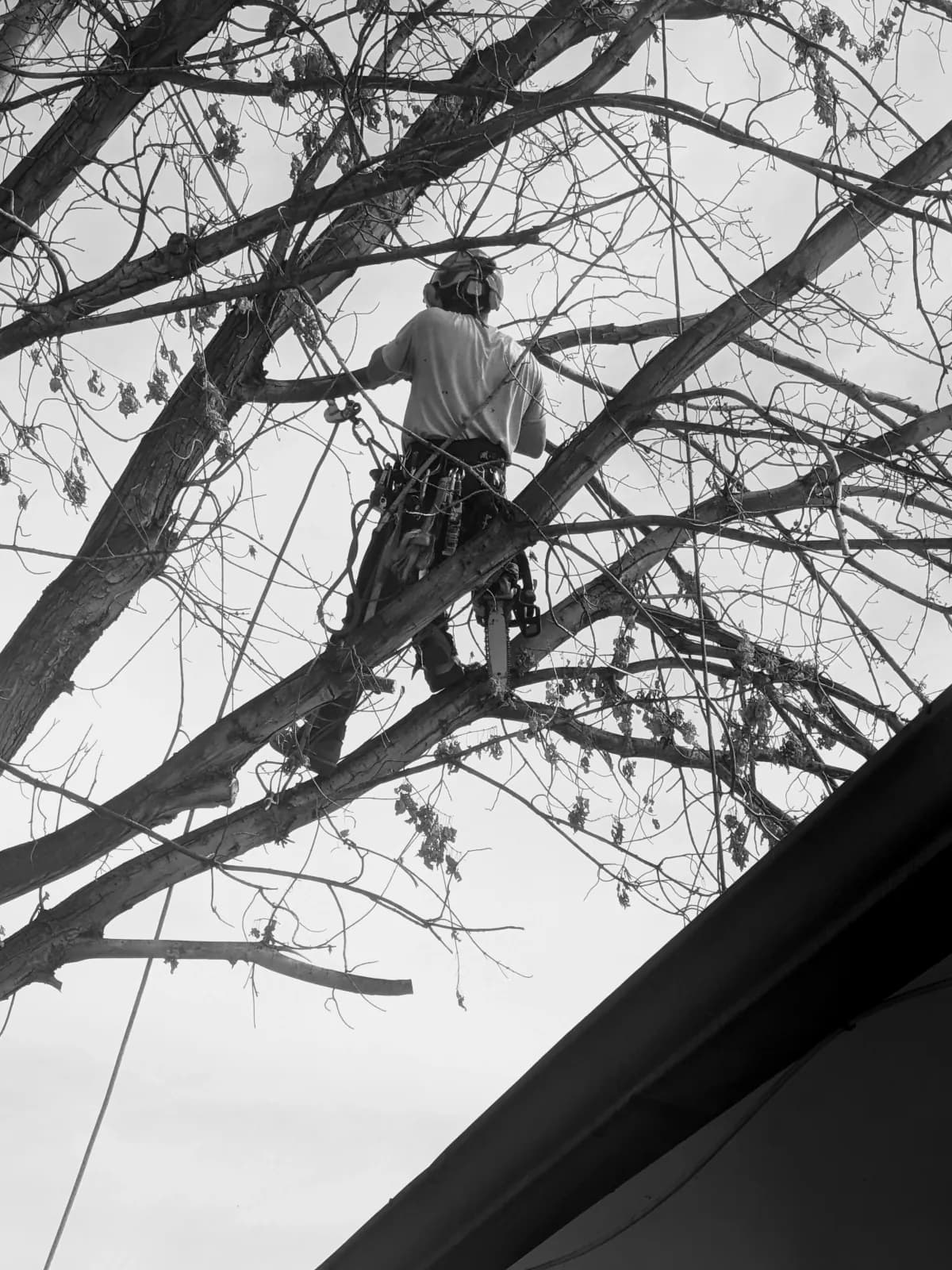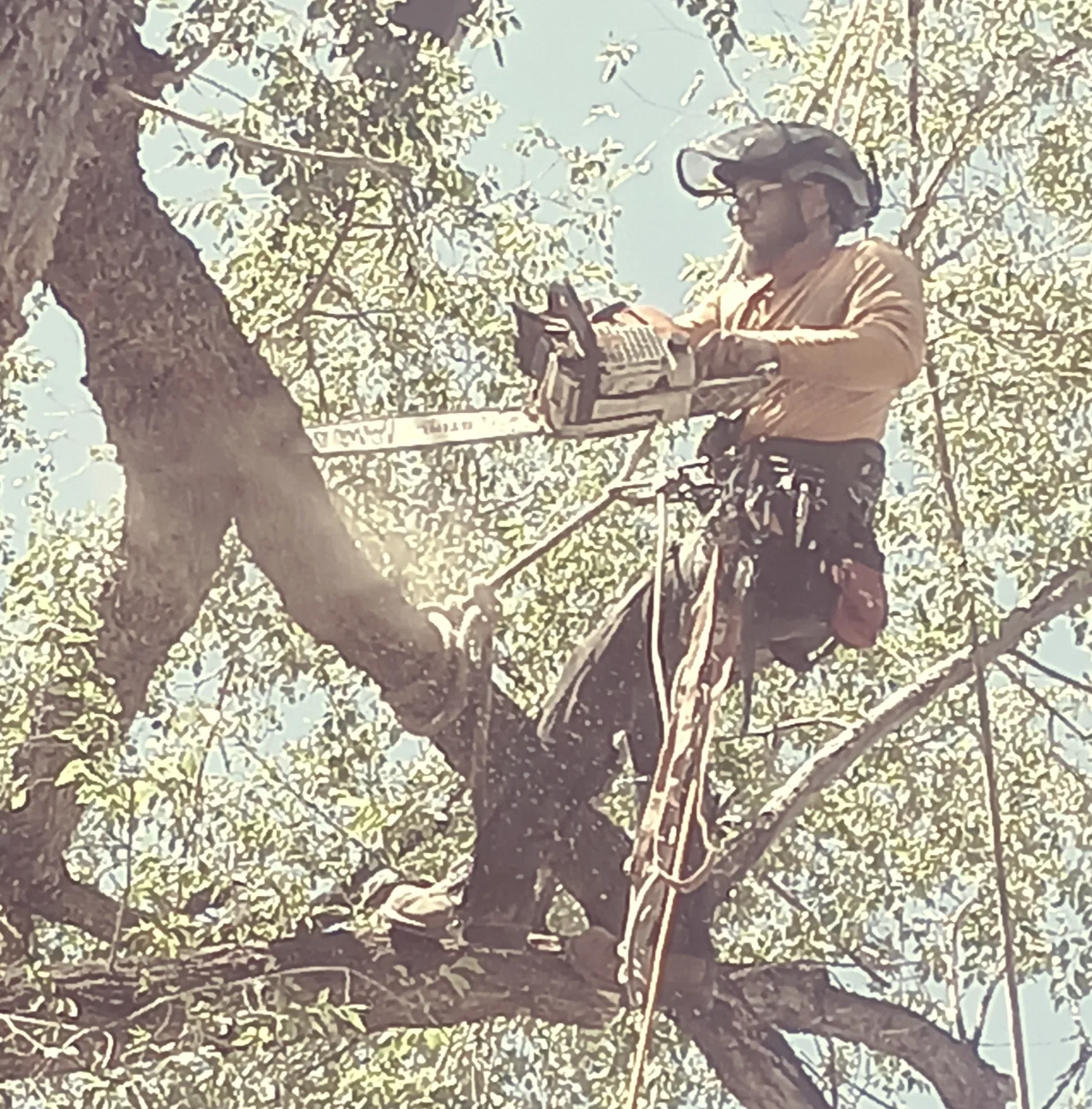
Living near open space and wooded areas in western Colorado is one of the region's real pleasures, but it comes with wildfire risk. Fire mitigation is about reducing the fuel that lets a fire climb toward and spread onto a property, giving structures a better chance and giving firefighters a safer place to work.
The good news is that a lot of mitigation is straightforward tree and brush work, and it makes a meaningful difference.
What defensible space means
Defensible space is the managed area around a structure where vegetation has been reduced and arranged to slow the spread of fire. The idea is not to clear everything, but to break up the continuous fuel that lets flames travel from the landscape to the building.
Reducing ladder fuels
Ladder fuels are the low branches, brush and small trees that let fire climb from the ground up into tree canopies. Once fire reaches the canopy it becomes far harder to control. Removing lower limbs and clearing the growth beneath trees interrupts that ladder and keeps more fire on the ground where it is easier to manage.
Thinning dense stands
Where trees are crowded together, fire can move quickly from crown to crown. Selective thinning opens up spacing between canopies so fire has a harder time jumping between trees. Thinning also improves the health of the remaining trees by reducing competition for water and light.
Removing deadwood and brush
Dead branches, fallen limbs and dry brush are ready fuel. Clearing deadwood from trees and removing accumulated brush around structures takes easy fuel out of the equation. Material we remove is often chipped on site or hauled away.
Making it a habit
Vegetation grows back, so mitigation is not a one-time task. Keeping defensible space maintained over the years is part of living well in a fire-prone area. Many property owners set up periodic work to stay ahead of regrowth rather than letting fuel build up again.
Getting started
If your property backs up to open space or wooded terrain around the Grand Valley, fire mitigation is worth considering. We can walk the property, identify the priorities and put together a plan focused on the areas that matter most. Reach out for a free estimate to get started.
How to think about zones around the home
Homeowners usually get more value from mitigation when they think in zones instead of treating the whole lot the same. The area closest to the home and any attached structures usually deserves the most attention because that is where fuel can make the fastest path to the building. Farther out, the focus often shifts to reducing density and breaking up continuity rather than clearing everything.
That way of thinking keeps the landscape from feeling randomly stripped. It also helps you and the crew decide which trees, shrubs and small trees matter most for fuel management and which ones can stay as part of the property. The goal is to create a safer layout, not a bare lot.
What the work usually includes near structures
Near a home, fire mitigation often means pruning lower branches, removing deadwood, clearing brush and thinning crowded growth so fire has fewer easy paths upward. If branches are touching a roof, deck or chimney area, they may need to be addressed as part of the fuel reduction plan. Access routes, driveways and outbuildings also matter because they shape how the crew stages the work.
In some cases a tree is too compromised to keep. When that happens, removal may be the safer choice because a badly damaged tree can become a different kind of hazard in the same fuel-heavy area. A good mitigation plan does not promise that every tree stays. It chooses the right trees to preserve and the right ones to remove.
What mitigation does not promise
Fire mitigation reduces fuel but it does not create a guarantee. Wind, slope, drought and the intensity of a wildfire all affect how a fire behaves. The work is still worth doing because it improves the odds and gives responders a better chance to work, but no honest plan should promise that a property is fire-proof.
That is why follow-up maintenance matters. Brush grows back, deadwood accumulates and a cleared area can become crowded again if nobody revisits it. A homeowner who treats mitigation as part of regular property care usually stays better prepared than someone who sees it as a one-time project.